Children’s workFrom the archive
A pop-up Hajj storyboard
Hilwaa made this pop-up storyboard in our Zulhijjah programme on the journey of Hajj, to show her family what she had learned.
In our Zulhijjah programme on the journey of Hajj, each child made a storyboard on black card. A storyboard is something a child lives with after the programme. They write their reflections on it, draw on it, and use it for the last of the 4-I: Impart.
Impart is where even the smallest child shares what they have learned. A storyboard makes that easy. The child takes it home and uses it to show one or two simple things they found out, to family members and friends who could not come, and to their parents as a recap.
Here are three parts of Hilwaa's storyboard.
The route
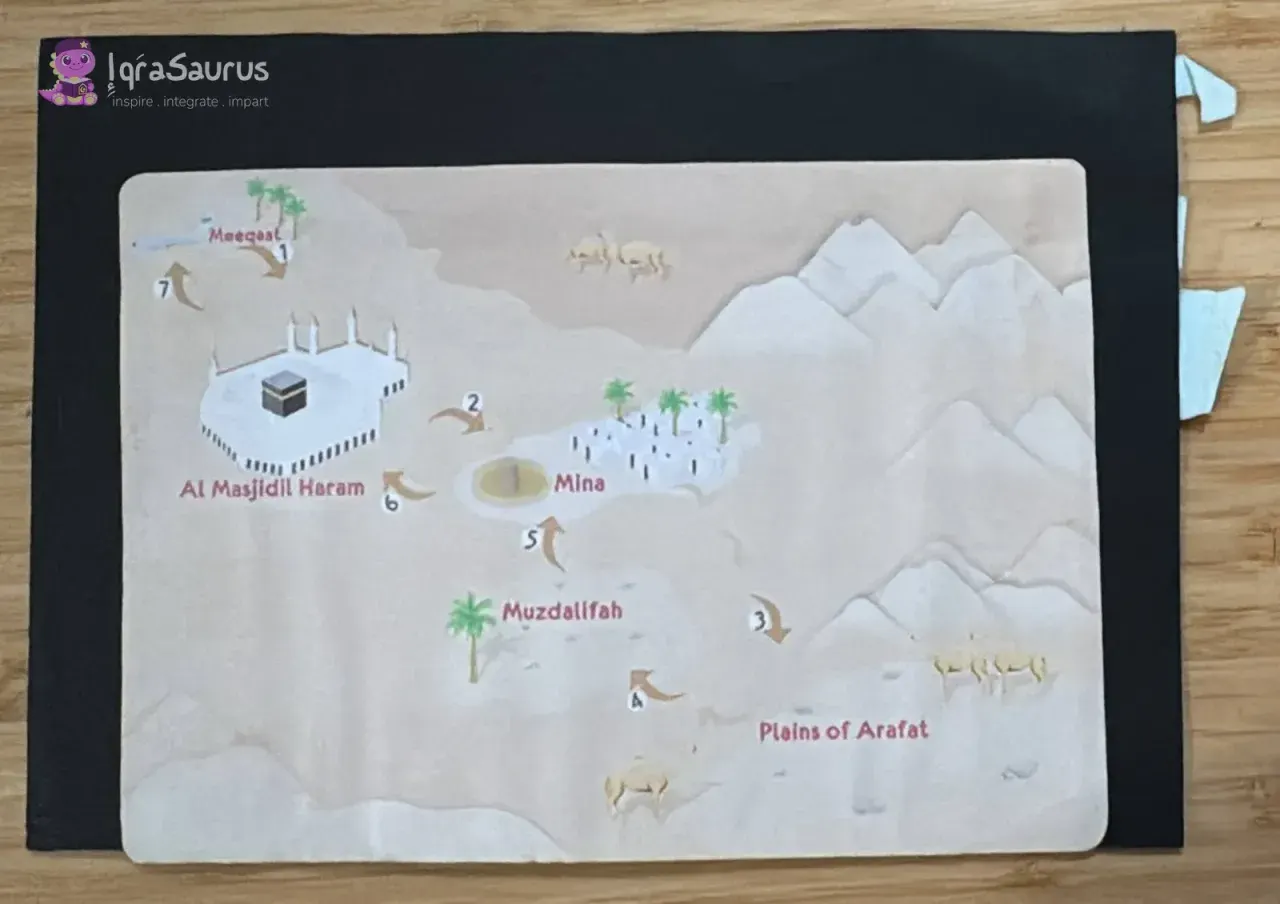
The first panel is a map of the journey of Hajj, with numbered arrows that lead from the Meeqat to Al Masjidil Haram, Mina, the Plains of Arafat and Muzdalifah. With it, a child can walk their family through the steps in order.
The gate
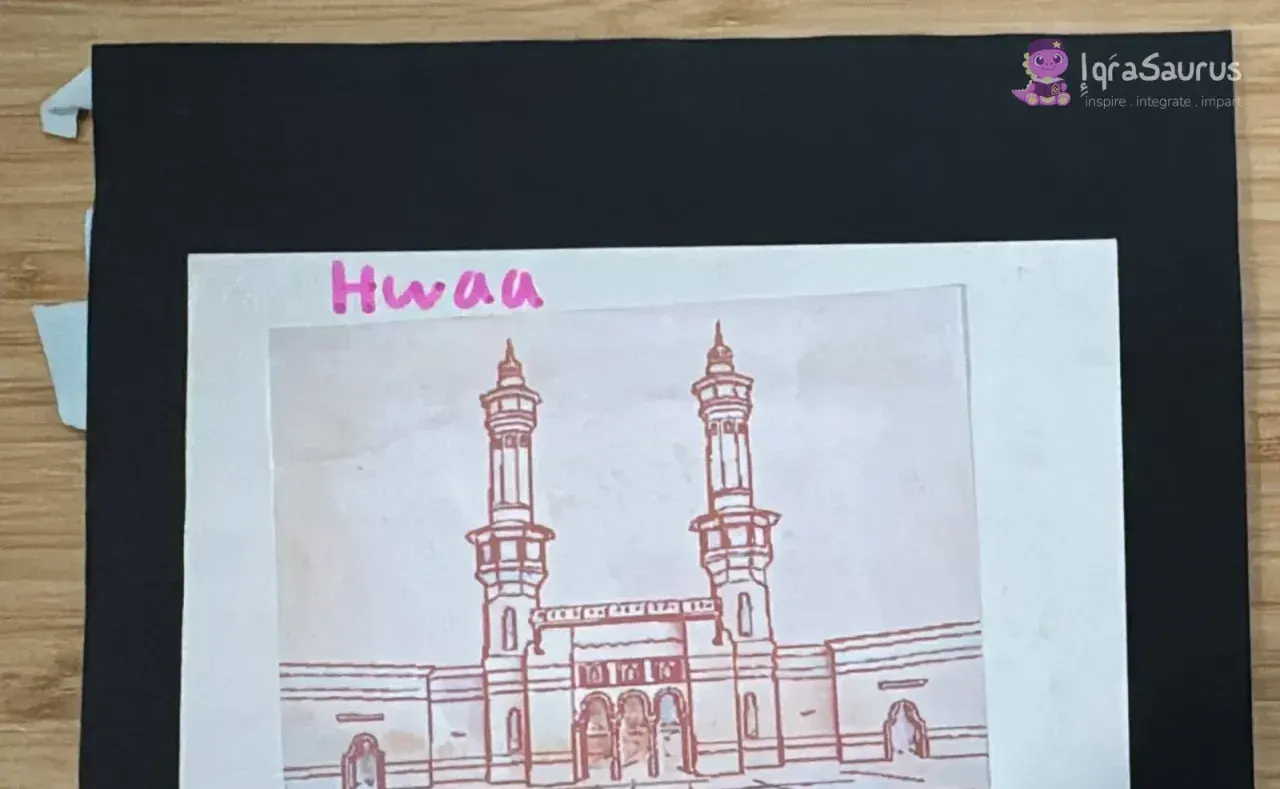
In the second panel, Hilwaa coloured in a picture of a gate of the Sacred Mosque in Makkah, with its two tall minarets, and wrote her name above it in pink.
The Ka'bah
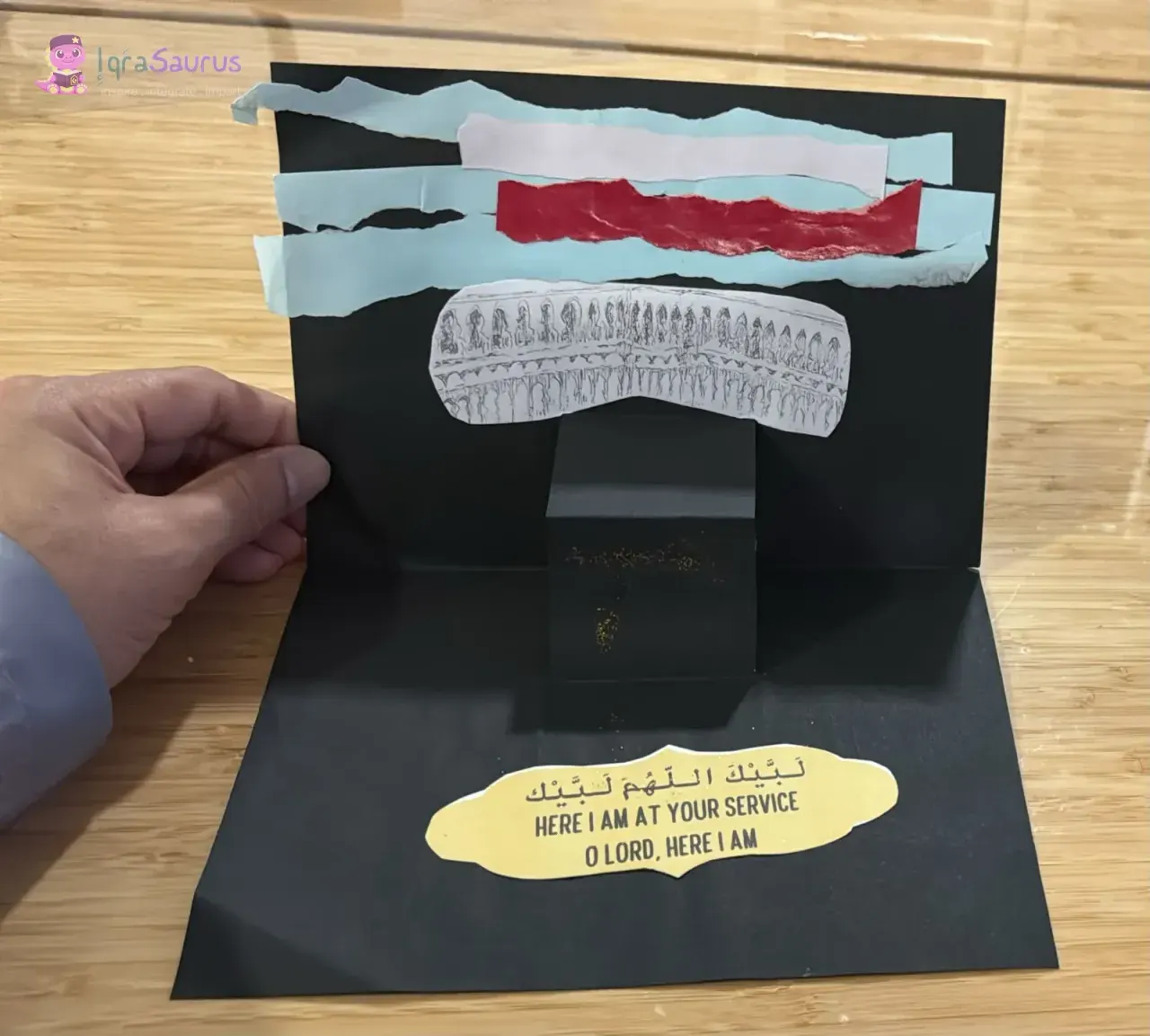
In the third panel, when the card opens, a Ka'bah pops up, with a strip of patterned paper above it and a sky of torn blue, white and red paper. Below it is the Talbiyah, the words pilgrims call out, in Arabic and English.
Making one at home
You don't need a programme to try this. A piece of black card folded in half makes the base. A pop-up shape is a small box glued into the fold, so it stands up when the card opens. Torn paper makes a quick sky. Then ask your child to show the finished card to someone who wasn't there, and to tell them one thing they learned.
In Umrah for Kids
This storyboard was made for our Hajj programme, not Umrah for Kids. We use the same idea in Umrah for Kids, so that children can walk their family through the steps of umrah.